
Shakira - The Barranquilla Firebird Who Made the Whole World Move
Photo of Shakira, via Wikimedia Commons
Shakira - Hips, Heritage, and the Kind of Reinvention That Makes Your Jaw Drop
When Shakira performed at the 2020 Super Bowl halftime show alongside Jennifer Lopez, approximately 104 million American viewers collectively lost their composure. The tongue trill heard around the world. The pole. The drumming. The relentless, physics-defying movement that made everyone in their living rooms feel simultaneously entertained and personally unfit. It was, by most accounts, one of the greatest halftime performances in Super Bowl history — and it was delivered by a woman from Barranquilla, Colombia, who has spent thirty years being exactly this extraordinary.
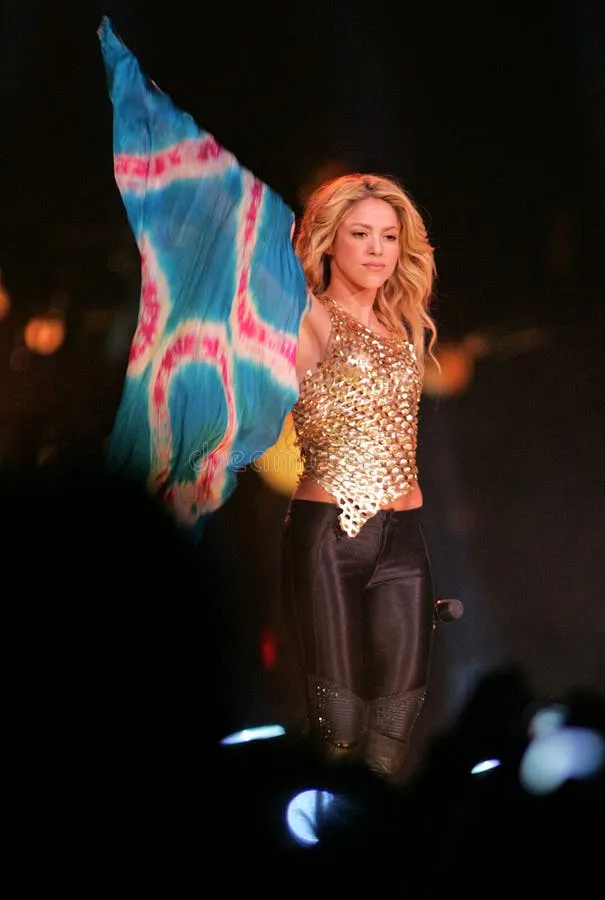 Photo: Shakira, via thumbs.dreamstime.com
As Colombia's most beautiful woman, Shakira represents something genuinely unusual in the global beauty conversation: an artist whose physical appeal is so deeply connected to her movement, her music, and her heritage that separating them is essentially impossible. She doesn't just look beautiful. She moves beautifully. She sounds beautiful. She is, in the most complete sense of the word, a total aesthetic experience.
The Girl from Barranquilla
Shakira Isabel Mebarak Ripoll was born in 1977 in Barranquilla, a Caribbean port city that sits at the intersection of Colombian, Lebanese, and African cultural influences — which goes a significant way toward explaining why her art has always been so impossible to place in a single box. Her father is of Lebanese descent; her mother is Colombian. She grew up absorbing both worlds, learning belly dance from her Lebanese heritage and cumbia from the streets of Barranquilla, and writing poetry before she was ten years old.
She signed her first record deal at thirteen. Sony Music Colombia, to their credit, recognized something exceptional, even if the first two albums — Magia (1991) and Peligro (1993) — didn't exactly set the world on fire. She was a teenager finding her voice, which is a process that requires patience from everyone involved.
The voice arrived, comprehensively, with Pies Descalzos in 1995. The album sold over five million copies across Latin America and Spain, established her as a legitimate star, and introduced the world to a vocal style — raw, slightly raspy, emotionally unguarded — that sounded like nothing else on the radio. Dónde Están los Ladrones? (1998) doubled down on that identity and sold over eight million copies. By the end of the 1990s, she was the biggest female artist in Latin music.
Crossing Over Without Selling Out
The crossover moment came with Laundry Service in 2001, an album that remains one of the most successful English-language crossover records in history. Whenever, Wherever introduced her to American radio audiences who had somehow missed the previous six years of her dominance, and the music video — featuring those hips doing things that physics textbooks had not previously accounted for — became one of the most-watched clips of the early internet era.
What made the crossover remarkable was its authenticity. Shakira did not sand down her edges for American consumption. She brought the belly dancing. She brought the guitar. She brought the rock influences she'd absorbed from Led Zeppelin and Nirvana alongside the cumbia and the Lebanese musical traditions. The result was a sound and a visual identity that was completely, stubbornly, magnificently hers.
She Wolf (2009), Sale el Sol (2010), Shakira. (2014) — each album cycle demonstrated an artist who understood evolution without abandoning identity. And then El Dorado (2017) won her the Grammy for Best Latin Pop Album, reminding anyone who had momentarily forgotten that she is, at her core, a songwriter of genuine craft.
The Beauty of Motion: An Aesthetic Unlike Any Other
Shakira's beauty is not the kind that sits still and waits to be admired. It is kinetic, expressive, and fundamentally inseparable from the way she occupies space. Her face — those enormous dark eyes, the wide smile, the bone structure that manages to look simultaneously delicate and strong — is striking in photographs. But photographs only tell half the story.
Watch her perform and you understand something different entirely. Her connection to movement, particularly the belly dance traditions of her Lebanese heritage, gives her a physical expressiveness that most performers spend entire careers trying to approximate. The famous hip movement is not a gimmick. It is a language, and she is fluent in it in a way that is genuinely rare.
Her hair — naturally dark, frequently worn in loose waves that move with her — has become as much a part of her visual identity as the dancing. Her style has evolved from early-career rock-influenced aesthetics through a more polished pop presentation and back again, always retaining the sense that she is dressing for herself rather than for any particular audience's approval.
At 47, she looks like what happens when good genetics meet a lifetime of physical discipline and genuine joy in movement. The effect is, to use the technical term, devastating.
The Business Architecture of a Global Star
Shakira's financial empire is built on multiple pillars, each reinforcing the others in the way that well-constructed empires tend to do.
Music Sales: With over 75 million albums sold worldwide, Shakira ranks among the best-selling music artists in history. Her catalog spans Spanish and English language markets, giving her a revenue base that most artists can only dream of. Streaming has added another dimension — her songs continue to generate millions of plays monthly, with Waka Waka (This Time for Africa) alone sitting comfortably among the most-streamed Latin songs in history.
World Tours: Her touring business has been consistently enormous. The She Wolf Tour (2011), the El Dorado World Tour (2018), and various arena tours have collectively generated hundreds of millions of dollars. Her live show is, by universal agreement, worth every cent of the ticket price — partly because of the production values and partly because watching Shakira perform live is a genuinely unrepeatable experience.
Endorsements: Her partnership with Oral-B has been one of the more unusual celebrity brand alignments in recent memory — and it works, largely because she brings the same commitment to dental hygiene promotion that she brings to everything else. Her collaboration with Lacoste produced a well-received clothing line that leaned into her athletic aesthetic. She has also worked with Pepsi, Activia (in a partnership that spawned its own viral internet moment), and various other brands, with her endorsement income estimated in the $15–20 million range annually at peak periods.
BZRP Music Session: In January 2023, Shakira released her collaboration with Argentine producer Bizarrap — a diss track aimed squarely at her ex-partner Gerard Piqué — and the internet essentially ceased to function normally for approximately two weeks. The song broke multiple Spotify records, reached number one in dozens of countries, and demonstrated that a woman in the middle of a very public personal crisis could channel that energy into one of the most commercially and culturally successful singles of the year. The track reportedly earned her millions in streaming revenue and relaunched her cultural relevance to an entirely new generation of listeners.
Real Estate: Following her highly publicized relocation from Barcelona to Miami in 2023, Shakira now bases herself in a waterfront property in the Miami area, joining a community of Latin entertainment royalty that finds South Florida considerably more welcoming than a Spanish tax authority investigation.
The Post-Divorce Reinvention: A Masterclass in Defiance
Let us be direct: Shakira's public separation from footballer Gerard Piqué in 2022, following reports of his infidelity, could have been a career-diminishing moment. Instead, it became something closer to a career-defining one.
The Bizarrap session was only the beginning. She followed it with TQG alongside Karol G, Copa Vacía with Manuel Turizo, and a string of releases that positioned her not as a woman defined by heartbreak but as a woman energized by it. The narrative of her post-divorce reinvention — independent, defiant, more herself than ever — resonated with audiences worldwide and particularly strongly in the United States, where her story became something of a cultural touchstone for discussions about women, agency, and the very specific satisfaction of a well-executed public response.
Her 2024 world tour announcement confirmed what anyone paying attention already knew: Shakira is not winding down. She is, characteristically, just getting started.
The Colombian Standard
Shakira is the most beautiful woman in Colombia because Colombia, in its extraordinary cultural richness, produced exactly one person capable of synthesizing Lebanese heritage, Caribbean rhythms, rock guitar, belly dance, and five languages into a single coherent artistic identity — and then made that identity beautiful enough to stop traffic on every continent simultaneously. That is not a coincidence. That is Barranquilla doing what Barranquilla does. And the world is considerably more interesting for it.